
Geotechnical service
Slope Stability Analysis
Bay Area hillsides fail in slow creep and sudden slides — both are preventable with the right analysis. We evaluate static and seismic slope stability using limit-equilibrium and finite-element methods, then recommend grading, drainage, and stabilization systems that keep your site safe and permittable.
What's included
- Static and pseudo-static (seismic) slope stability analysis
- Limit-equilibrium and finite-element modeling
- Cut-and-fill grading recommendations
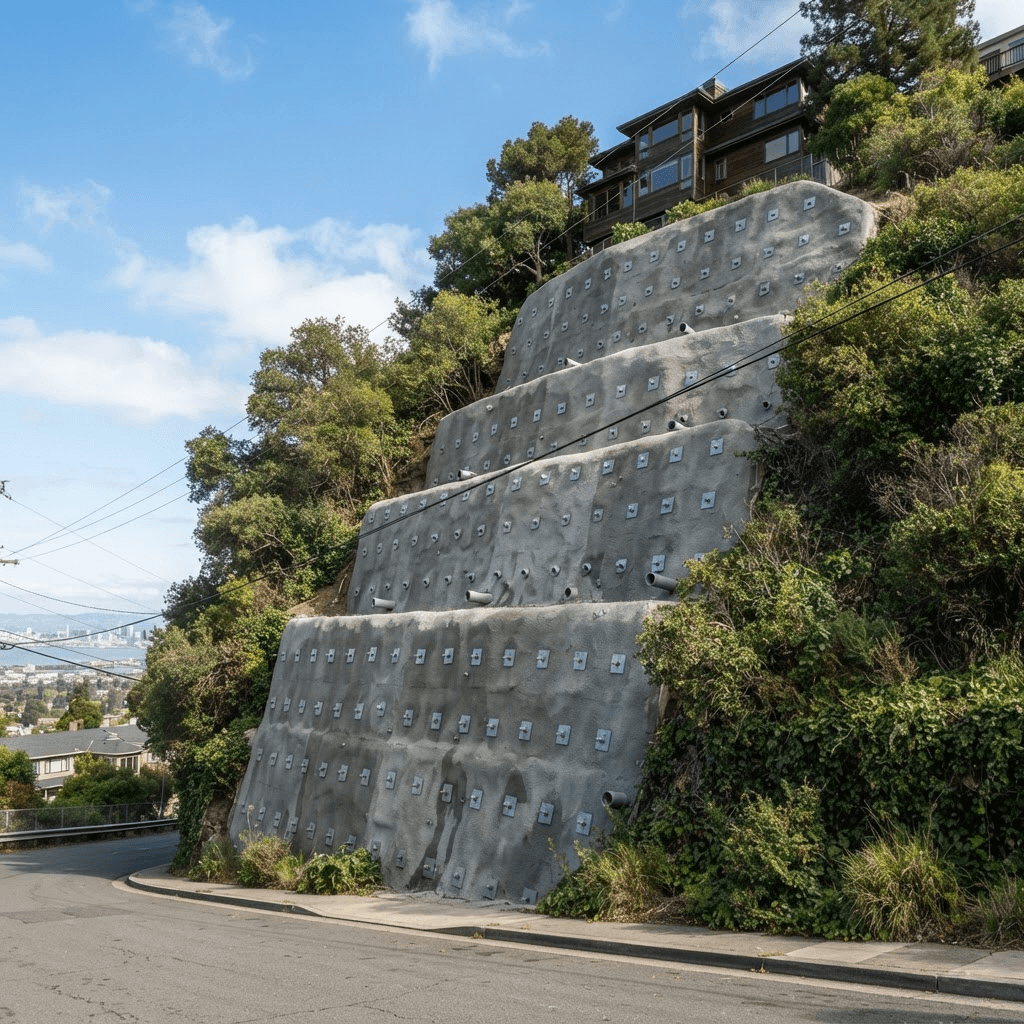
- Soil-nail, tieback, and shotcrete wall design
- Subsurface and surface drainage design
- Landslide repair and buttress-fill recommendations
What you receive
- Slope stability analysis report with factors of safety
- Stabilization and grading recommendations
- Retaining and shoring design parameters
- Drainage and maintenance guidance
When you need it
You need slope stability analysis for any project on or below a hillside, for new grading and retaining walls, and after signs of movement — cracked hardscape, tilting walls, or scarps. Most hillside jurisdictions require it as part of the geotechnical report.
Slope Stability — common questions
- My retaining wall is leaning — can you help?
- Yes. We investigate the cause (drainage, undersized wall, or slope movement), quantify the current factor of safety, and design a repair or replacement — from added drainage and tiebacks to a full soil-nail or buttress solution.
- Do you analyze slopes for seismic loading?
- Always, in seismic country. We run pseudo-static and, where warranted, Newmark deformation analyses so the design accounts for earthquake shaking, not just static conditions.
- What is a factor of safety and what value do I need?
- It is the ratio of resisting to driving forces on a slope. Codes typically require about 1.5 for static and 1.1 for seismic conditions; we design to meet or exceed the value your jurisdiction requires.
Related services
Tell us about your site.
Send us the location and what you have planned. You'll get a straight answer on what the ground can carry — and a fixed-fee proposal within 24 hours.